The green card application is long, and most of it is yours to complete. Form I-693 is the exception, because only a physician USCIS has specifically designated as a civil surgeon may perform the examination, record the findings, and seal the form. That designation is what makes an otherwise routine physical into a document USCIS will accept, and it is the reason an ordinary annual checkup, however thorough, cannot be substituted for it.
Lukuman Afuwape, MD holds that designation. Board certified in emergency medicine by the American Board of Emergency Medicine, he completed his medical degree at Meharry Medical College and his residency at Mercy St. Vincent Medical Center in Ohio, and he has spent more than fifteen years in emergency medicine, critical care, and flight medicine. Applicants who arrive for an I-693 are examined by a physician trained to notice what a checklist does not ask about, which occasionally matters a great deal.
“More than once an immigration exam has turned up something the patient had no idea was there. The form is the reason people come in, but the examination is still an examination, and I treat it as one.” – Lukuman Afuwape, MD
I highly recommend this urgent care. My dad recently had his immigration medical exam done by Dr. Afuwape. Incidentally, they found out that my dad had an underlying pulmonary infection/ edema. They went above and beyond and helped my dad get well by prescribing the necessary medications. Special mention to Lena who helped my dad with his X-ray appointments and to Malik that helped with my dad’s prescriptions.
What the Form I-693 Examination Actually Covers
Form I-693, Report of Immigration Medical Examination and Vaccination Record, exists to establish that an applicant is not inadmissible to the United States on health related grounds. Practically speaking, that comes down to three questions: whether the applicant carries a communicable disease of public health significance, whether required vaccinations are current, and whether any physical or mental condition presents a risk of harmful behavior.
The examination follows technical instructions written by the Centers for Disease Control and Prevention, which every civil surgeon in the country is bound by, so the components do not vary from clinic to clinic:
- Medical History Review: a discussion of past illnesses, hospitalizations, current medications, and prior treatment.
- Physical Examination: an assessment of the eyes, ears, nose, throat, heart, lungs, abdomen, skin, and lymph nodes.
- Tuberculosis Screening: a blood based interferon gamma release assay, with chest imaging ordered when results or history warrant it.
- Syphilis Testing: a blood test required for applicants aged eighteen and older, and for younger applicants when indicated.
- Gonorrhea Testing: a nucleic acid amplification test required for applicants aged eighteen through twenty four.
- Mental Health Assessment: an evaluation for conditions associated with harmful behavior, along with substance use history.
- Vaccination Review: verification of the immunizations USCIS requires, with doses administered on site when records fall short.


Concerns Applicants Bring Through the Door
Very few people arrive relaxed, and the worries tend to repeat themselves from one appointment to the next.
Missing or foreign vaccination records. Records left behind in another country, lost in a move, or written in a language the applicant cannot translate are the single most common obstacle. Neither situation is fatal to an application. Blood titer testing can demonstrate existing immunity for several vaccines, and any dose that genuinely is missing can usually be given during the visit.
A prior positive tuberculosis skin test. Applicants vaccinated with BCG in childhood frequently test positive on a skin test without ever having had active tuberculosis. The blood based test used at this clinic is not affected by prior BCG vaccination, which resolves the problem for most patients before it starts.
An existing medical condition. Diabetes, hypertension, asthma, and similar chronic conditions do not make an applicant inadmissible. The form asks the physician to note them, not to judge them, and documentation from a treating physician generally settles the matter.
Cost and timing pressure. Applicants often need the sealed form by a filing deadline they did not choose. Laboratory work and vaccinations handled on site shorten that timeline considerably compared with clinics that refer testing elsewhere.
What to Expect at Your Appointment
Most applicants complete the examination in a single visit lasting roughly forty five minutes to an hour, with the exception of anyone who needs chest imaging or whose laboratory results take a few days to return. The visit opens with a review of your identification, your vaccination records, and your unsigned Form I-693, followed by the history discussion and the physical examination. Blood and urine specimens are collected on site, and any vaccinations you need are given the same day.
When results are complete, Dr. Afuwape records his findings, signs the form, and seals it in an envelope addressed to USCIS. That envelope must reach USCIS unopened, since a broken seal invalidates the form and requires a new examination. A copy of the completed form is provided for your records so you never need to open the original.
“The seal is not a formality. I tell every patient the same thing on the way out, which is that the envelope stays closed and the copy in their hand is the one they read.” – Lukuman Afuwape, MD
What to Bring to Your I-693 Appointment
- Government Issued Photo ID: a valid passport, permanent resident card, or state issued driver license.
- Form I-693, Unsigned: the current USCIS edition, filled out but left unsigned until the appointment.
- Vaccination Records: every immunization record available, including documents issued in other countries.
- A Number If Assigned: the alien registration number listed on your USCIS correspondence.
- Medical Documentation: records for any ongoing condition, plus a current list of prescription medications.
- Prior Test Results: documentation of any previous tuberculosis testing or treatment you have received.

Frequently Asked Questions About the I-693 Immigration Medical Exam
-
Only a physician designated as a civil surgeon by U.S. Citizenship and Immigration Services may complete Form I-693 for an applicant filing from inside the United States. Dr. Afuwape holds that designation, so the examination and the form are handled in one place rather than split between a physician and a separate authorized clinic.
-
Under USCIS guidance, a Form I-693 properly completed and signed by a civil surgeon on or after November 1, 2023 does not carry a fixed expiration date, though it supports the application it was filed with and USCIS retains discretion to request an updated examination. Because USCIS has revisited this policy more than once, applicants should confirm current guidance with their attorney or on the USCIS website before relying on an older exam.
-
The required list is set by the CDC and generally includes measles, mumps, and rubella, tetanus and diphtheria, pertussis, polio, varicella, hepatitis A and B, influenza type B, pneumococcal, rotavirus, meningococcal, and seasonal influenza where age appropriate. Not every vaccine applies to every applicant, since several are required only within specific age ranges.
-
Titer testing can confirm existing immunity through a blood sample for several of the required vaccines, and any dose that is genuinely absent can be administered during the visit. Missing records extend the process modestly but rarely derail it.
-
No. A broken seal makes the form unusable and requires a new examination at additional cost, so the envelope must reach USCIS exactly as it left the clinic. A copy of the completed form is provided at checkout for your own reference.
-
Conditions such as diabetes, high blood pressure, asthma, and depression are documented on the form rather than treated as grounds for inadmissibility. The narrow health related grounds involve specific communicable diseases, missing required vaccinations, and conditions associated with harmful behavior, and a treating physician’s records typically resolve any question that arises.
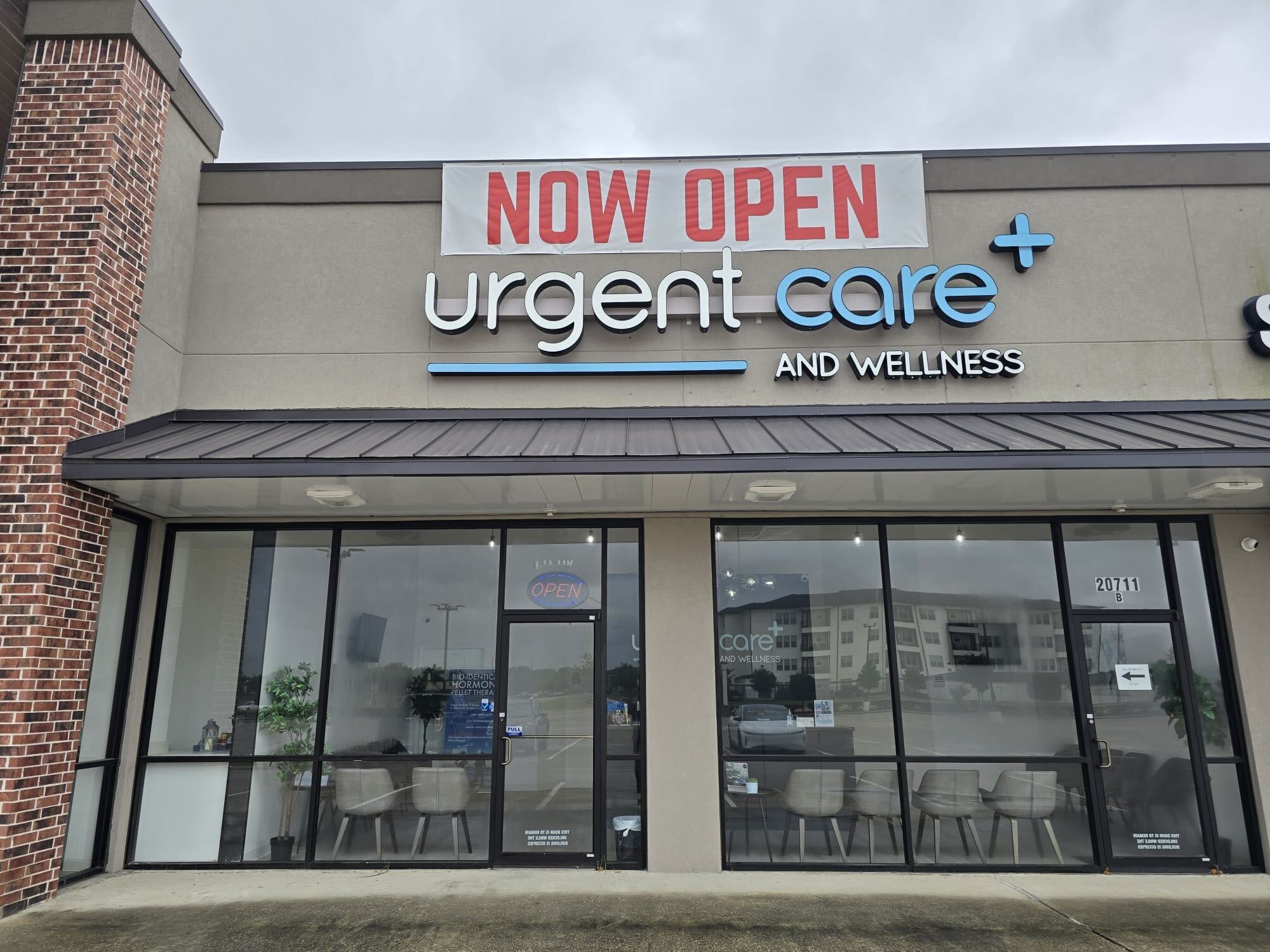
Why Applicants Choose Urgent Care Plus and Wellness
- Designated Civil Surgeon: the examination and the sealed form are completed by a USCIS designated physician on site.
- Onsite Laboratory: tuberculosis, syphilis, and gonorrhea testing are drawn and processed without an outside referral.
- Vaccinations Available: missing immunizations can usually be administered during the same appointment.
- Emergency Medicine Background: more than fifteen years of acute care experience applied to a routine examination.
- Spanish Speaking Support: appointments conducted with language assistance available throughout the visit.
- Six Day Availability: Monday through Saturday hours from 8am to 8pm for applicants working full time.
Schedule Your I-693 Immigration Medical Exam in Richmond, TX
Filing deadlines rarely leave room for a clinic that takes three weeks to return laboratory results, and the medical examination is one of the few pieces of a green card application that a qualified physician can genuinely take off your hands. Urgent Care Plus and Wellness serves applicants throughout Richmond, Rosenberg, Sugar Land, Mission Bend, Pecan Grove, Cinco Ranch, Katy, Missouri City, and the surrounding Fort Bend County communities, with testing and vaccinations handled under one roof. Call (281) 762-2208 or book online to schedule your examination, and the team will confirm exactly what to bring before you arrive.
Immigration requirements vary by individual case. A medical evaluation does not guarantee eligibility, approval, or acceptance by USCIS. This page is general health information and is not a substitute for legal advice regarding your immigration application.
Medically reviewed by Lukuman Olumide Afuwape, M.D. on